
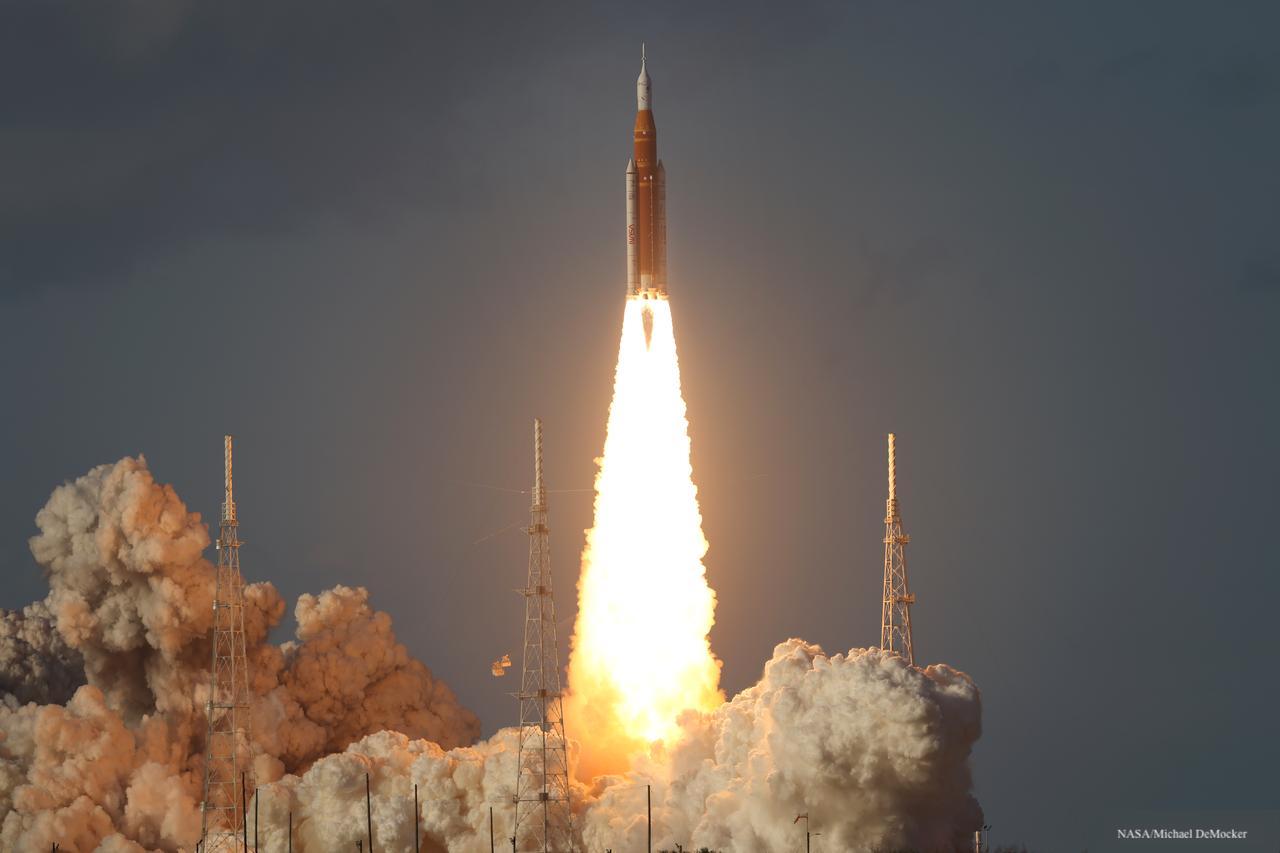
On April 2, NASA launched Artemis II, a mission that will take humans beyond low Earth orbit for the first time in over half a century. The 10-day mission, carrying four astronauts aboard the Orion spacecraft, could take them farther from Earth than the Apollo missions.
The spacecraft will follow a “free-return trajectory,” a path that allows it to loop around the Moon and return to Earth without requiring major course corrections. Unlike the Apollo missions, Artemis II will not enter a low lunar orbit or attempt a landing, instead following a wider path around the Moon.
As Orion moves farther from Earth, the crew will experience a perspective rarely seen by humans: both Earth and the Moon visible together from deep space. This vantage point is expected to produce not only striking imagery but also valuable data. Astronauts will refine their observation targets midway through the journey, working closely with teams on Earth to maximize scientific return.
The mission will reach a historic moment when the Moon’s gravity begins to pull more strongly than Earth’s. This will mark the first return to the Moon’s sphere of influence since 1972. From there, Orion will swing behind the Moon, entering a region never directly observed by astronauts before. At distances far greater than those reached during the Apollo program, Orion will travel on a wider path around the Moon.
This phase offers a rare opportunity to study the Moon’s far side. The astronauts will be able to see Mare Orientale, a massive impact basin along the edge of the Moon. According to Cody Paige of Columbia University, the mission represents the first time humans will directly observe such regions, while collaborating in real time with scientists on Earth to deepen understanding of lunar geology.
The timing of the mission also creates the possibility of witnessing unusual celestial events. As Orion passes through the Moon’s shadowed region, astronauts may observe a total solar eclipse under conditions different from those on Earth, revealing the Sun’s outer atmosphere in detail. Around the same period, a sungrazing comet, C/2026 A1 (MAPS), is expected to pass extremely close to the Sun.
But the most critical moment of the mission comes at the very end. Reentry into Earth’s atmosphere remains one of the most dangerous phases of spaceflight. Orion’s heat shield must withstand temperatures of around 2,200 degrees Celsius before parachutes deploy and the capsule splashes down in the Pacific Ocean.
Artemis II is not simply a return to the Moon. It is a transition from short-term exploration to the foundations of a long-term human presence beyond Earth.
4月2日、NASAはアルテミスIIミッションを打ち上げた。これは、人類が半世紀以上ぶりに低軌道を越えて宇宙へ向かうミッションである。オリオン宇宙船に4人の宇宙飛行士を乗せた10日間のこのミッションは、アポロ計画のミッションよりも地球から遠くまで到達する可能性がある。
宇宙船は「自由帰還軌道」を採用する。これは月の周囲を回り、複雑な軌道修正を行うことなく地球へ帰還できる軌道である。アポロ計画とは異なり、アルテミスIIは月の低軌道には入らず、着陸も行わない。代わりに、より大きく回り込む軌道で月を通過する。
オリオンが地球から離れていくにつれ、宇宙飛行士たちは人類がほとんど経験したことのない視点を得ることになる。深宇宙から地球と月を同時に見渡すことができる。この視点は、印象的な画像だけでなく貴重なデータの取得にもつながると期待されている。宇宙飛行士たちは航行の中盤で観測対象を絞り込み、地上のチームと連携しながら科学的成果の最大化を図る。
ミッションは、月の重力が地球の重力を上回る歴史的な瞬間を迎える。これは1972年以来、人類が再び月の影響圏に入ることを意味する。その後、オリオンは月の裏側へと回り込み、これまで宇宙飛行士が直接観測したことのない領域に入る。アポロ計画よりもはるかに遠い距離を保ちながら、オリオンはより大きな軌道で月を周回する。
この段階では、月の裏側を詳細に観測する貴重な機会が得られる。宇宙飛行士たちは、月の縁に位置する巨大な衝突盆地「東の海(Mare Orientale)」を目にすることができる。Cody Paige(コロンビア大学)は、このミッションが人類にとってこうした領域を直接観測する初めての機会になると指摘する。同時に、地上の科学者とリアルタイムで連携し、月の地質に関する理解を深めていく。
また、ミッションのタイミングは特異な天文現象の観測機会も生み出す。オリオンが月の影に入る際、宇宙飛行士たちは地上とは異なる条件下で皆既日食を観測する可能性がある。これにより、太陽の外層であるコロナを詳細に観測できる。さらに同時期には、サングレーザー彗星「C/2026 A1(MAPS)」が太陽に極めて近づくと予想されている。
しかし、ミッションで最も重要かつ危険な局面は最後に訪れる。大気圏再突入は依然として宇宙飛行の中で最もリスクの高い工程の一つである。オリオンの耐熱シールドは約2200℃の高温に耐えなければならない。その後、パラシュートが展開され、カプセルは太平洋に着水する。
アルテミスIIは単なる月への回帰ではない。それは短期的な探査から、地球を超えた長期的な人類の活動基盤へと移行するための一歩である。